Plowing a Minnesota Driveway With a Machine
Minnesota winters. Just the phrase alone can conjure images of bone-chilling cold, endless snow, and that dread feeling in your lower back after a particularly heavy snowfall. For many of us, the ritual of digging out the driveway, often multiple times a week, becomes a grueling test of endurance. It's not just the sheer physical labor, but the time it steals from your day, the way it makes you question why you live in this beautiful, yet undeniably harsh, state. But what if there was a way to reclaim your winter, to turn that dreaded chore into something almost… enjoyable? This guide is all about unleashing the power of your ATV or UTV to conquer your Minnesota driveway, saving your back, your time, and perhaps even your sanity. We'll dive deep into everything from essential equipment to smart plowing techniques, making sure you're ready to face whatever Mother Nature throws your way.
Why Your ATV or UTV is a Winter Workhorse (and Why it's a Smart Move in Minnesota)
Let's be honest, when most of us think about ATVs and UTVs, we picture tearing up trails, exploring state forests, or maybe even pulling a deer out of the woods during hunting season. But these machines are so much more than just recreational toys, especially here in Minnesota where utility is often king. Winter brings a whole new set of demands, and your off-road vehicle is uniquely suited to meet them, transforming from a weekend warrior into an indispensable partner in snow removal.
Beyond Recreation: The Utility of Off-Road Machines
Think about the sheer power and traction packed into your ATV or UTV. That robust engine, those aggressive tires, the ability to navigate uneven terrain – it's all perfectly engineered for moving serious amounts of snow. For Minnesota property owners, this isn't just about a fun new gadget; it's about practical problem-solving. Whether you live on a sprawling rural property with a long gravel driveway or a suburban home with a paved two-car, the principle remains the same: a machine can do the heavy lifting far better and faster than a human with a shovel.
It’s about extending the usefulness of your investment. You bought that machine for adventure, for getting things done around your property, and for enjoying the outdoors. Plowing snow fits right into that practical mindset. It means your vehicle isn't just sitting idle for months during the coldest part of the year; it's actively working for you, earning its keep, and making your life considerably easier during what can be the most challenging season.
The Back-Breaking Reality of Minnesota Winters
Anyone who has spent a few winters here knows the specific agony of shoveling heavy, wet Minnesota snow. It's not the light, fluffy stuff they get out West. Often, it's dense, water-laden, and seemingly weighs a ton per scoop. And it's not a one-and-done affair; storms can roll in back-to-back, or a single blizzard might drop a foot or more, only to be followed by another five inches a few days later. Your back, shoulders, and knees take a brutal beating.
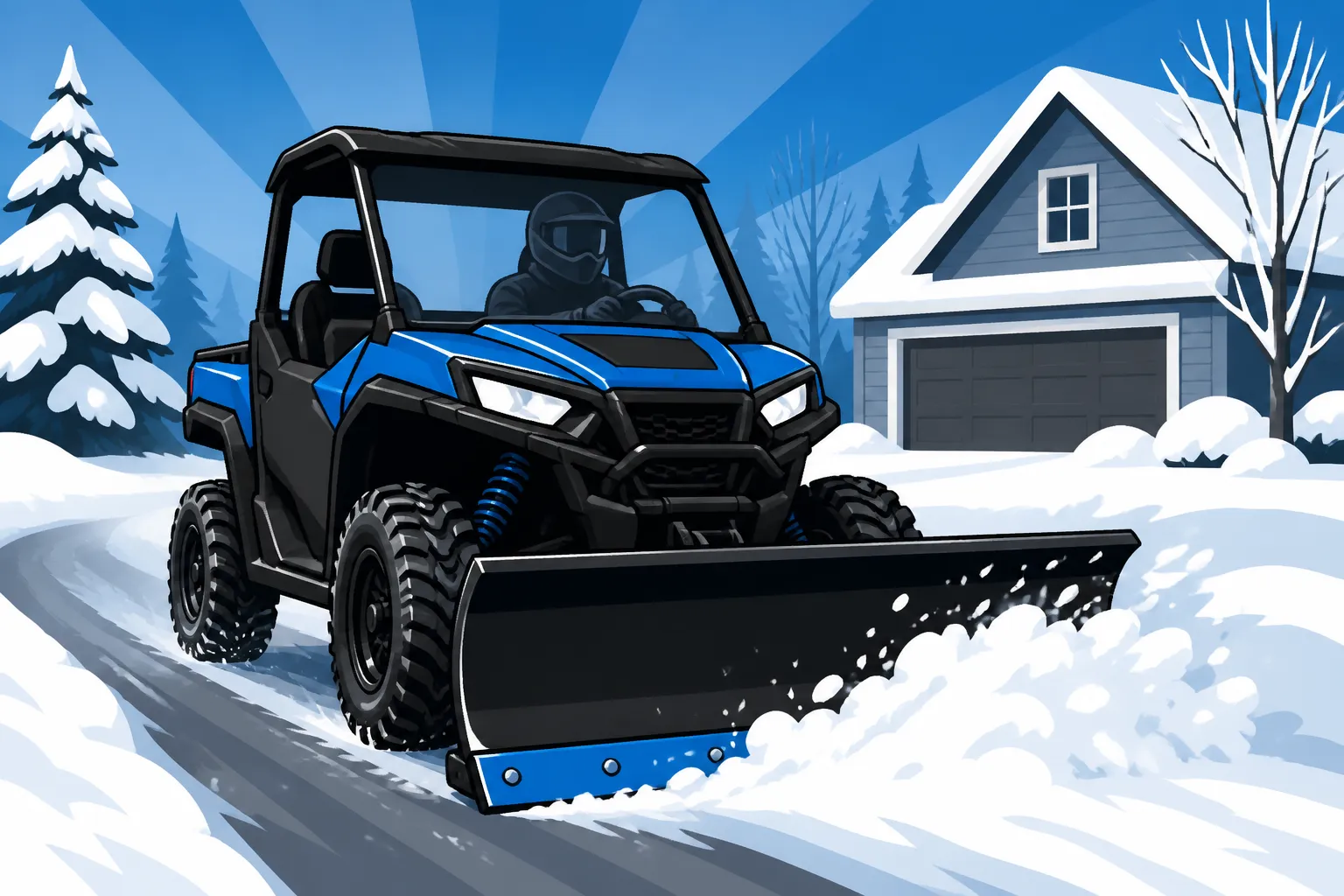
Imagine waking up after a fresh 8-inch snowfall, the kind that makes your eyes widen and your spirit deflate a little. Instead of bundling up in layers, gritting your teeth, and spending an hour or two battling the elements with a shovel, you could be hopping onto your ATV or UTV, firing it up, and clearing that entire driveway in a fraction of the time, from the comfort of a heated cab if you have a UTV, or simply with a warm cup of coffee nearby if you're on a quad. The difference isn't just convenience; it's a profound shift in how you experience winter chores.
Essential Equipment for a Minnesota Plowing Setup
Transforming your recreational machine into a snow-plowing powerhouse requires more than just good intentions. You need the right tools for the job, tools that are durable enough to withstand the rigors of a Minnesota winter and efficient enough to get the job done quickly and effectively. Skimping on these essentials can lead to frustration, damage to your machine or property, and ultimately, a return to that dreaded shovel.
The Right Plow Blade for the Job
Choosing a plow blade isn't a one-size-fits-all decision, especially with the varied snow conditions we experience in Minnesota. You'll generally encounter a few main types. Straight blades are the most common and versatile, great for pushing snow in front of you. V-plows, which can articulate into a "V" shape, are fantastic for cutting through deep drifts or breaking a path, then can be straightened or angled for pushing. Some even offer a scoop or U-plow configuration, which helps contain snow and move larger volumes.
Consider the material: steel blades are robust and durable, ideal for heavy, compacted snow, though they can be harsher on driveway surfaces. Polyethylene (poly) blades are lighter, often glide over surfaces more smoothly, and are less likely to scratch decorative concrete, but might struggle with dense, icy snow. Blade width is another key factor. You want a blade wider than your machine to ensure you clear a full path, typically 50-72 inches, depending on your ATV/UTV size. Brands like SuperATV offer a wide range of blades, from straight to V-plows, designed to stand up to tough winter conditions, often featuring reinforced edges and easy-attach systems that are crucial when you're fumbling with cold fingers.
| Blade Type | Best For | Pros | Cons |
|---|---|---|---|
| Straight Blade | General plowing, light to moderate snow | Versatile, simple, effective for most driveways | Can "spill" snow around edges in deep conditions |
| V-Plow (Angled) | Deep drifts, initial path cutting | Breaks through heavy snow efficiently, reduces side spill | More complex, can be heavier, higher cost |
| Push Tube (Mid-Mount) | Any snow type, gravel driveways | Excellent leverage, minimal stress on machine's front | Can reduce ground clearance temporarily, requires specific mount |
| Front Mount | Light to moderate snow, quick attach/detach | Maintains ground clearance, easy to install | Less leverage than mid-mount, more stress on machine's front frame |
Winches, Mounts, and Lift Systems
A plow blade is only as good as its ability to be raised and lowered, and that's where the winch comes in. A robust winch, typically 2,500-3,500 pounds for ATVs and 3,500-4,500 pounds for UTVs, is absolutely essential. It allows you to effortlessly lift the blade to clear obstacles, reposition, or transport it. Relying on a manual lift is possible for very light blades and small jobs, but for serious Minnesota snow, an electric winch is non-negotiable for both efficiency and your own well-being.
Next, consider the mounting system. Most plows attach via either a front-mount or a mid-mount system. Front-mounts attach directly to the front of your machine and are generally easier to install and remove, making them a good choice if you only use your plow occasionally. Mid-mount systems, on the other hand, attach to the frame underneath your machine, offering superior leverage and distributing the stress more evenly across the chassis. This makes them ideal for heavier plowing and extended use, as they tend to be more durable in the long run. Many SuperATV plow systems, for example, come with robust mid-mount push tubes, which riders often find more stable for heavy plowing tasks like pushing the heavy snow left by city plows at the end of the driveway. Ensure whatever system you choose is compatible with your specific make and model of ATV or UTV.
Traction and Weight: Staying in Control
Pushing hundreds or even thousands of pounds of snow requires serious traction. Your standard trail tires might get the job done in light snow, but for deep powder, icy patches, or heavy, wet slush, you'll want more. Aggressive-tread mud tires can provide a good grip, but for true Minnesota winter conditions, consider a set of tire chains. They are incredibly effective at digging into ice and packed snow, providing the bite you need to maintain momentum and control.
Beyond traction, weight distribution is crucial. When you put a plow on the front of your machine, you're shifting the center of gravity and reducing weight on the rear tires, which are your drive wheels. This can lead to your rear tires spinning helplessly, even with good tread. The solution is to add weight to the rear of your machine. This could be as simple as a few sandbags strapped to your cargo rack or in your UTV bed, or dedicated weight blocks designed for this purpose. Adding 50-150 pounds to the rear can make a dramatic difference in how effectively your machine pushes snow, ensuring your tires stay firmly planted and you can steer predictably.
Preparing Your Machine and Property for Plowing Season
The first significant snowfall of a Minnesota winter always seems to catch someone off guard. Don't let it be you! A little preparation before the flakes start to fly can save you a lot of headaches, frustration, and potential breakdowns when you need your machine most. Taking the time to get your ATV or UTV, and your property, ready for plowing season ensures a smooth and efficient snow removal process all winter long.
Pre-Season Machine Check-Up
Before the mercury truly plummets and the first snow warning hits, give your machine a thorough going-over. Just like you'd prepare your car for winter, your ATV or UTV needs some attention. Start with all fluids: check your engine oil, coolant levels (ensure it's rated for extreme cold), and brake fluid. A fresh oil change is often a good idea before heavy winter work. Next, inspect your battery. Cold weather is notoriously hard on batteries, so make sure yours is in top condition. Clean the terminals, check the charge, and consider putting it on a [Battery Replacement on a Quad] or battery tender if you're not using it constantly.
Inspect your tires for proper inflation and any signs of wear. A soft tire won't give you the traction you need. Check all lights – headlights, taillights, and any auxiliary lights – to ensure they're working. Winter plowing often happens in the dark mornings or evenings, and good visibility is paramount. Finally, inspect your plow system itself. Are all bolts tight? Is the cutting edge in good shape, or does it need to be flipped or replaced? Are all pivot points greased? Ensuring everything is mechanically sound before the first real snowfall will prevent frantic, cold-weather repairs.
Preparing Your Driveway and Surroundings
Once your machine is ready, it’s time to prepare the battlefield: your driveway and its surrounding landscape. This step is absolutely critical, especially before the first snow completely covers the ground. Walk your entire driveway and identify any potential obstacles that will be hidden by snow. This includes decorative stones, garden bed edges, landscape timbers, sprinkler heads, or even uneven concrete seams. Mark these with brightly colored stakes or flags that are tall enough to remain visible even under a foot or more of snow. Hitting a hidden obstacle with your plow can cause significant damage to your plow blade, your machine, or your property, not to mention a jarring experience for you.
Next, plan your snow storage. Where will you push the snow? Do you have enough space on the sides of your driveway, or will you need to push it further back into your yard? Visualize where snow will accumulate and ensure you have designated areas that won't impede sightlines, block mailboxes, or create drainage problems when the thaw comes. If you have a long driveway, consider creating a large "snow shelf" along one side, a place where you can consistently push snow without running out of room later in the winter. Thinking ahead here saves a lot of re-shoveling or re-plowing later in the season.
Winterizing Costs for Minnesota Owners
While the initial investment in an ATV or UTV can be significant, the yearly cost of owning and maintaining it for winter use is a practical consideration for Minnesota owners. Beyond the initial purchase of the plow blade, winch, and mounting system, there are ongoing expenses. You'll want to budget for [Winterizing Costs for a Minnesota Owner], which includes things like fuel stabilizer for storage periods, a reliable battery tender to keep your battery charged in the cold, and perhaps even a dedicated set of winter tires or chains if you're serious about traction.
Factor in the cost of routine maintenance: oil changes, checking and topping off fluids, and replacing worn cutting edges on your plow blade. While these costs might seem like an added burden, compare them to the alternatives. Hiring a professional snow plowing service can run into hundreds or even thousands of dollars over a winter season, depending on your driveway length and snowfall frequency. The physical toll and time commitment of shoveling are also significant, even if they don't have a direct monetary value. Many Minnesota owners find that the investment in a plowing setup for their ATV or UTV quickly pays for itself in convenience, time saved, and preserved physical health.
Plowing Techniques for Minnesota's Varied Snowfall
Plowing snow isn't just about putting a blade on your machine and driving forward. Minnesota's unpredictable winter weather means you'll encounter everything from light, fluffy dustings to heavy, wet blizzards and rock-hard drifts. Mastering different techniques for these varied conditions will make your plowing more efficient, reduce strain on your machine, and result in a cleaner, safer driveway.
Tackling Light Snow and First Dustings
When it's just a few inches of light, fresh snow, your ATV or UTV with a plow blade is incredibly efficient. Often, a single pass down the center and then angling the blade to push the snow to the sides is all you need. For gravel driveways, this is where technique really matters. You want to "float" the blade just slightly above the gravel surface to avoid digging in and scraping up your rocks. This might mean adjusting your skid shoes (small feet on the bottom corners of your plow blade) to the correct height. It’s always better to leave a thin layer of snow than to create a trench in your driveway.
The key to light snow is often to plow early and often. Don't wait for it to get deep or compacted. Plowing frequently prevents snow from bonding to the driveway surface, which can lead to slippery ice patches. Early plowing is also less demanding on your machine and typically consumes less fuel. It's about staying ahead of the storm, rather than reacting to a massive accumulation.
Deep Snow and Heavy Drifts
This is where your machine truly earns its stripes, and where proper technique becomes paramount. For deep snow, resist the urge to simply ram through it. Instead, take smaller bites. Make multiple passes, overlapping each one, instead of trying to clear the entire width of your driveway in one go. Angle your blade to throw snow efficiently to the side, rather than trying to push it straight forward. If you have a V-plow, this is its moment to shine, as it can cut through deep snow with less resistance.
Heavy drifts, especially those at the end of your driveway left by city plows, are the ultimate test. These can be incredibly dense and icy. Approach these at a slower speed, using short, powerful pushes. If your machine bogs down, back up a little and take an even smaller bite. Avoid hitting these at high speeds, as it puts immense stress on your plow system and your machine's frame, and can potentially send you over the handlebars if you're on an ATV. Patience is key here. It's a marathon, not a sprint.
Pushing and Stacking Snow Smartly
Efficient snow removal isn't just about clearing your driveway; it's about where you put the snow. Start by thinking about the prevailing wind direction on your property. If you can push snow to the leeward side of your driveway, it will naturally help create a windbreak, reducing future drifting onto your cleared path. For longer driveways, or those with limited space, mastering the art of the "snow shelf" or bank is essential. Instead of just pushing snow off to the side, push it further back, creating a solid, tall bank. This creates more storage space for subsequent snowfalls, preventing you from running out of room later in the winter.
Always be mindful of where your snow is going. Don't push snow onto a neighbor's property without their explicit permission, as this can lead to disputes. Avoid piling snow around mailboxes or fire hydrants. Also, be careful not to create massive piles that will block your vision when backing out of your driveway or refreeze into hazardous ice patches. A well-placed snow pile can be beneficial, but a poorly placed one can cause more problems than it solves.
Safety and Legal Considerations for Plowing in Minnesota
Operating any machinery, especially in adverse winter conditions, carries inherent risks. When you're plowing your Minnesota driveway, whether it's for yourself or helping out a neighbor, it's crucial to prioritize safety and be aware of any legal ramifications. A little common sense and foresight can prevent accidents, injuries, and potential liability issues.
Operator Safety First
Your personal safety should always be your number one concern. Winter in Minnesota means cold, and potentially dangerous, conditions. Dress in warm, layered clothing, ensuring you have good gloves or mittens, a warm hat, and waterproof boots. Consider wearing reflective gear, especially if you're plowing near a road or in low light conditions, as other vehicles might not see you. Good lighting on your machine is also essential; ensure your headlights and taillights are clean and fully functional, and consider adding auxiliary LED lights for better visibility of your plow area.
Stay alert and aware of your surroundings. Plowing can be monotonous, but distractions can lead to serious accidents. Never operate your ATV or UTV while under the influence of alcohol or drugs. This isn't just a legal issue, but a major safety hazard. Carbon monoxide is another silent threat, particularly if you're running your machine in an enclosed space like a garage. Always ensure adequate ventilation when starting or working on your ATV/UTV indoors.
Property Damage and Liability
Even with the best intentions, accidents can happen. When plowing, you're operating powerful machinery in sometimes challenging conditions, and the potential for property damage exists. Hitting a hidden curb, a sprinkler head, or a decorative lawn ornament can quickly lead to costly repairs, either to your property or, worse, to someone else's. This is why marking obstacles beforehand, as discussed earlier, is so vital.
If you are plowing for a neighbor, or anyone other than yourself, understanding liability becomes even more important. What if you accidentally damage their mailbox? What if someone slips and falls on a patch of ice you created by poorly piled snow? It's wise to ensure your [Insuring an ATV in Minnesota] policy or [Does a Homeowners Policy Cover a Quad?] provides adequate liability coverage. A brief, informal agreement with your neighbor beforehand about who is responsible for what can also prevent misunderstandings and disputes down the road.
When Plowing Extends Beyond Your Driveway
Most of this discussion centers on plowing your own private driveway. However, some people might use their machines to help out friends, neighbors, or even take on small commercial jobs. If you're plowing for others, especially for compensation, the legal landscape can change. Your personal insurance policy might not cover commercial operations, and you could be exposed to greater liability. It's important to verify your coverage.
Additionally, be aware of any local ordinances or homeowner association rules regarding snow removal. While it's generally fine to clear your own driveway, some communities might have rules about where you can push snow or the hours during which you can operate noisy machinery. While your machine is likely [Registering a Machine Kept Only on Your Land] or [Registering a Machine Used Only for Ice Fishing], the act of plowing on other properties could be seen differently. Always check local regulations, and if you're thinking of offering plowing services professionally, look into business insurance and any necessary permits or licenses.
Maintaining Your Plowing Investment
Your ATV or UTV is a significant investment, and its plow system adds another layer to that. To ensure both your machine and its plow remain reliable year after year, especially after enduring the harsh Minnesota winters, proper maintenance and off-season storage are crucial. Neglecting these steps can lead to premature wear, costly repairs, and a frustrating experience when the first snowfall hits next season.
Post-Plow Cleaning and Inspection
After each plowing session, especially if you've been working in slushy conditions or areas where road salt is present, take a few minutes to clean your plow and the front of your machine. Salt and grime can be incredibly corrosive. A quick rinse with a hose, paying attention to the plow blade, push tubes, and mounting hardware, can go a long way in preventing rust and extending the life of your equipment.
While cleaning, conduct a quick visual inspection. Check for any loose bolts on the plow frame or mounting system. Look for excessive wear on the cutting edge of your blade – some blades are reversible, allowing you to get double the life out of one edge. Inspect your winch cable or synthetic rope for fraying or damage, and make sure all pivot points move freely. Catching small issues early can prevent them from becoming major problems that sideline your machine when you need it most.
Off-Season Storage and Maintenance
When spring finally arrives and the last snow has melted, it’s time to prepare your plow system and machine for its summer hiatus. First, remove the plow blade and mounting system from your ATV or UTV. Clean them thoroughly, removing any remaining dirt, rust, or corrosion. For steel components, consider applying a coat of rust-inhibiting paint or a protective grease/oil coating to all exposed metal surfaces. Store the blade in a dry place, either hanging it or laying it flat to prevent warping.
For your ATV or UTV, proper [Winterizing a Machine in Minnesota] (or rather, spring-izing it for summer storage) is essential. Clean the machine thoroughly. Check and change all fluids as needed. Consider putting fuel stabilizer in the tank if you plan on long-term storage, and connect your battery to a [A Battery Tender Through a Minnesota Winter] to keep it topped off. Store your machine in a clean, dry location, ideally covered, to protect it from dust and elements. Following these steps ensures your machine will be ready to go when winter rolls around again.
Extending the Life of Your Plow System
Beyond basic cleaning and storage, there are specific steps you can take to maximize the lifespan of your plow system. The cutting edge, which takes the brunt of the abuse, is often replaceable. Monitor its wear and replace it before it wears down into the actual plow blade itself. Some cutting edges are made of durable steel, while others are poly for gentler use on delicate surfaces. Knowing when to flip or replace it is key.
Regularly lubricate all moving parts and pivot points on your plow frame and winch mechanism. Grease zerks are there for a reason – use them! This prevents seizing and ensures smooth operation. If you notice any bent or severely rusted components, address them proactively. Aftermarket parts and upgrades, sometimes from companies like SuperATV, can often be used to replace worn components or even enhance the durability of your existing plow system, providing you with many years of reliable snow-clearing performance.
Disclaimer
This article is for general informational purposes only and does not constitute professional advice. Laws, prices and regulations vary by location and change over time. Consult a qualified professional for guidance on your specific situation.