Minnesota Sales Tax Rate on an ATV
Oh, the joy of bringing home a new-to-you ATV or UTV! Whether it's a shiny new model from the dealership or a well-loved machine from a private seller, there's nothing quite like the excitement of planning your first trail ride or imagining how much easier winter plowing will be. But then, the real world often intrudes with questions about paperwork, and for many folks in Minnesota, one of the biggest head-scratchers is sales tax. It's a topic that can feel murky, confusing, and frankly, a bit annoying, especially when you just want to focus on riding. This guide is here to cut through that confusion, explaining Minnesota's sales tax rate on ATVs and UTVs, how it's calculated, and what you need to know to handle it correctly, whether you're buying new, used, or from out of state.
Minnesota's Base Sales Tax Rate for Off-Highway Vehicles
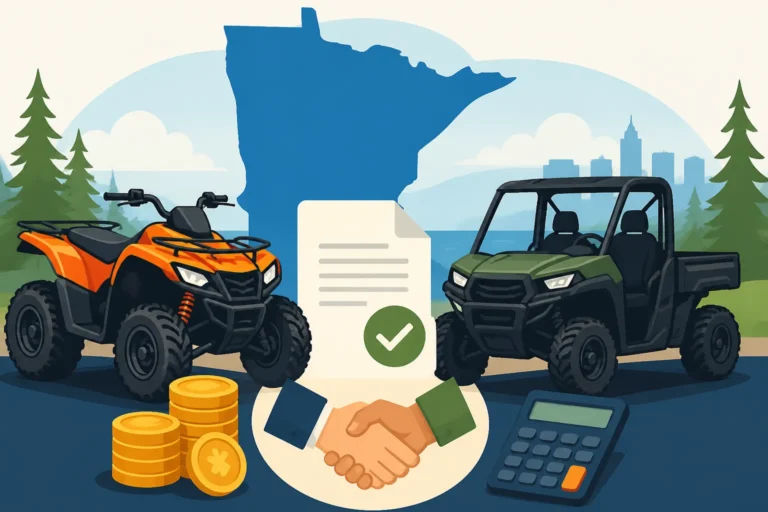
Let's get right to it: Minnesota has a pretty straightforward statewide sales tax rate that applies to most purchases, and that absolutely includes your new (or new-to-you) ATV or UTV. This isn't some special, hidden tax; it's the standard state sales tax, and it's something every buyer needs to account for in their budget. Many people assume that if they're buying from a private party, they can somehow skirt this tax, but that's a common misconception that can lead to a surprise bill down the road. The reality is, unless a very specific and rare exemption applies (like certain farm equipment used exclusively for agricultural production, which is a whole other nuanced conversation), you'll be paying sales tax on your machine.
The reason for this is simple: the state views the sale of an off-highway vehicle, regardless of whether it's from a licensed dealer or an individual, as a taxable transaction. This revenue helps fund various state services, including, often, the very trail systems and natural resources that we all enjoy with our machines. So, in a way, it's a contribution to the community of riders and outdoors enthusiasts. When you buy from a dealer, they'll typically calculate and collect this tax from you at the point of sale. They're licensed to do so and will submit it to the state on your behalf. This is generally the most straightforward way to handle it, as it's built into the purchase process.
Understanding the Taxable Value
One of the first questions people often ask is, "What exactly is the sales tax applied to?" It's generally applied to the full purchase price of the ATV or UTV. This means the agreed-upon price between you and the seller. If you negotiate a fantastic deal, the tax will be calculated on that lower, agreed-upon price, which is a nice little bonus for being a savvy shopper. However, it's crucial that this purchase price is realistic. The state of Minnesota has systems in place to flag unusually low sales prices, especially on newer models, to prevent people from intentionally understating the value to avoid tax. If a purchase price seems suspiciously low, the Department of Natural Resources (DNR) or deputy registrar processing your [Registering an ATV in Minnesota] may use fair market value guides (like NADA or Kelley Blue Book) to assess a more accurate taxable value, and you could be on the hook for the difference, plus potential penalties.
It’s not just the sticker price, though. If you add certain accessories at the time of purchase from a dealer and they are included in the overall sale price, they typically factor into the taxable amount. Things like a winch, a plow mount, or a roof for your side-by-side might be part of that initial calculation. However, separate services, such as labor for installation or certain dealer documentation fees, are usually treated differently and may not be subject to sales tax, or they might be taxed at a different rate. Always ask for an itemized breakdown if you're unsure.
Sales Tax Calculation in Different Purchase Scenarios
The way sales tax is collected can vary slightly depending on where and how you acquire your ATV or UTV. But the underlying principle, that the tax is owed, remains constant. Understanding these differences can help you prepare for the financial commitment and ensure a smooth registration process.
Dealer Purchases and Trade-Ins
When you purchase an ATV or UTV from a licensed dealer in Minnesota, the process is usually quite streamlined. The dealer will calculate the sales tax based on the agreed-upon purchase price and add it to your total. You'll pay this directly to the dealer, and they are responsible for remitting it to the state. This takes a lot of the guesswork out of it for you.
What about trade-ins? This is where many buyers find a bit of a silver lining. In Minnesota, if you trade in an existing machine (like an older ATV, UTV, or even a different type of vehicle sometimes) towards the purchase of a new one from a dealer, the sales tax is generally calculated on the net difference between the new machine's price and the trade-in value. For example, if you buy a $15,000 UTV and trade in an old quad for $5,000, you'd only pay sales tax on $10,000. This can represent significant savings, and it's a major advantage of [Trade-In Credit at a Minnesota Dealer] rather than selling your old machine privately. Make sure the dealer clearly itemizes this on your bill of sale so there's no confusion later.
Here's a simplified look at how this might break down:
| Item | Example 1: No Trade-in | Example 2: With Trade-in |
|---|---|---|
| New Machine Price | $12,000 | $12,000 |
| Trade-In Value | $0 | -$4,000 |
| Taxable Amount | $12,000 | $8,000 |
| Sales Tax Rate | (Current state rate) | (Current state rate) |
| Sales Tax Due | Calculated on $12,000 | Calculated on $8,000 |
Note: The actual state sales tax rate can fluctuate, so always check the Minnesota Department of Revenue's official website or consult with your dealer for the most current figures. We cannot provide specific percentage rates here.
Private Party Sales: Your Responsibility
This is where things sometimes get tricky for buyers. Many individuals mistakenly believe that if they buy a used ATV or UTV from a friend, a neighbor, or through an online marketplace, they don't owe sales tax. This is absolutely incorrect for Minnesota residents. When you purchase an off-highway vehicle from a private seller, you are still responsible for paying Minnesota sales tax on the transaction. The difference is that the seller doesn't collect it from you. Instead, you will pay this tax directly to the state when you go to [Registering an ATV in Minnesota] or transfer the title into your name.
You'll typically do this at a deputy registrar office. They will require a bill of sale detailing the purchase price. This is why having a clear, accurate, and signed bill of sale is so incredibly important for private transactions. A well-drafted bill of sale, perhaps generated using a service like LawDepot, ensures both buyer and seller are protected and provides the necessary documentation for tax assessment. If you show up without a proper bill of sale, or if the stated price seems unrealistic, the registrar may use a standardized valuation guide to determine the taxable amount, which might be higher than what you actually paid. Don't put yourself in that position; make sure your [What a Minnesota Bill of Sale Should Carry] is solid.
Navigating Sales and Use Tax for Out-of-State Purchases
Buying an ATV or UTV from a seller outside of Minnesota adds another layer to the sales tax conversation. This is where the concept of "use tax" comes into play, and it's something many Minnesota residents are unaware of until they try to register their machine.
Minnesota's Use Tax Explained
If you purchase an ATV or UTV outside of Minnesota and intend to use or store it within the state, Minnesota's "use tax" generally applies. This isn't a separate tax rate; it's effectively the same rate as the state sales tax, but it's applied to purchases made out-of-state where sales tax wasn't collected by the seller (or was collected at a lower rate than Minnesota's). The purpose of the use tax is to ensure fairness – it prevents residents from buying items out-of-state specifically to avoid paying Minnesota sales tax, which would put Minnesota businesses at a disadvantage.
Let's say you spotted a fantastic deal on a side-by-side in Wisconsin and drove over to pick it up. [Paying Minnesota Tax on a Machine Bought in Wisconsin] requires understanding use tax. If Wisconsin's sales tax rate is lower than Minnesota's, or if the seller didn't charge any sales tax (which is common in private sales, even across state lines), you would owe Minnesota use tax on the purchase price when you bring the machine back and try to register it here. You would typically pay the difference if you paid a lower tax, or the full Minnesota rate if you paid no tax at all.
This is a critical point that many people miss, often leading to unexpected costs when they go to register their machine. The deputy registrar or DNR will ask about the purchase location and sales tax paid. If you haven't paid Minnesota's rate, or the difference, you'll be required to do so at that time. Don't be caught off guard; factor this into your budget if you're considering an out-of-state purchase. [Minnesota Use Tax After an Out-of-State Buy] is a very real financial obligation.
Documentation for Out-of-State Buys
Just like with private sales within Minnesota, having impeccable documentation is paramount when buying out of state. You'll need a clear bill of sale that states the purchase price, the date of sale, and the seller's information. If you paid sales tax in the state of purchase, you'll also need proof of that payment (like a line item on the bill of sale or a separate receipt) to potentially get a credit against Minnesota's use tax.
Without this proof, Minnesota will assume no sales tax was paid and will charge you the full use tax amount based on the purchase price or fair market value. Again, a comprehensive bill of sale, potentially drafted with the assistance of a template from LawDepot, can make all the difference in proving your tax obligations and payments. Ensure that all the [Documents a Minnesota Registrar Wants] are in order before you visit the office.
Avoiding Common Pitfalls and Ensuring Compliance
Navigating sales tax for your ATV or UTV can feel like walking through a minefield, but with a bit of foresight and accurate information, you can avoid common mistakes that lead to frustration or even penalties. Compliance isn't just about avoiding trouble; it's about being a responsible owner and contributing to the resources we all share.
Pitfalls to Watch Out For
- Understating the Purchase Price: This is a big one. Some buyers and sellers are tempted to write a lower price on the bill of sale to reduce the sales tax owed. This is considered tax fraud. As mentioned, Minnesota registrars are trained to spot unusually low prices and can use valuation guides to assess the fair market value. If caught, you could face back taxes, interest, and significant [Penalties for an Unregistered ATV in Minnesota] or misrepresentation, which is far more costly than paying the correct amount upfront. It's simply not worth the risk.
- Ignoring Use Tax: As discussed, many folks forget about use tax when buying out of state. They celebrate their great deal, bring the machine home, and then get a rude awakening at the registrar's office. Always budget for Minnesota's sales/use tax rate, regardless of where you make your purchase.
- Incomplete or Vague Bill of Sale: For private sales, the bill of sale is your primary document. A handwritten note on a napkin won't cut it. It needs to clearly state the buyer and seller's names and addresses, the date of sale, the machine's VIN, and the agreed-upon purchase price. Without this, the registrar may have to make assumptions about the machine's value, which might not be in your favor. When [Buying a Used ATV in Minnesota: The Paperwork] is involved, precision is key.
The Importance of Accurate Documentation
At the end of the day, accuracy and transparency are your best friends when it comes to sales tax. Keep all your purchase records, including the bill of sale, any receipts, and proof of sales tax paid (if applicable) in a safe place. When you go to register your machine, having a complete and honest paper trail will make the process smooth and stress-free.
Consider using a reputable template for your bill of sale, especially for private transactions. Services like LawDepot offer customizable legal documents that ensure all the necessary information is included and properly formatted, giving you peace of mind and making the registration process much smoother. This attention to detail demonstrates your commitment to compliance and protects both parties involved in the sale. The state has an interest in collecting the correct amount of tax, and you have an interest in avoiding penalties and unexpected fees. By being prepared, you ensure a fair process for everyone.
Disclaimer
This article is for general informational purposes only and does not constitute professional advice. Laws, prices and regulations vary by location and change over time. Consult a qualified professional for guidance on your specific situation.