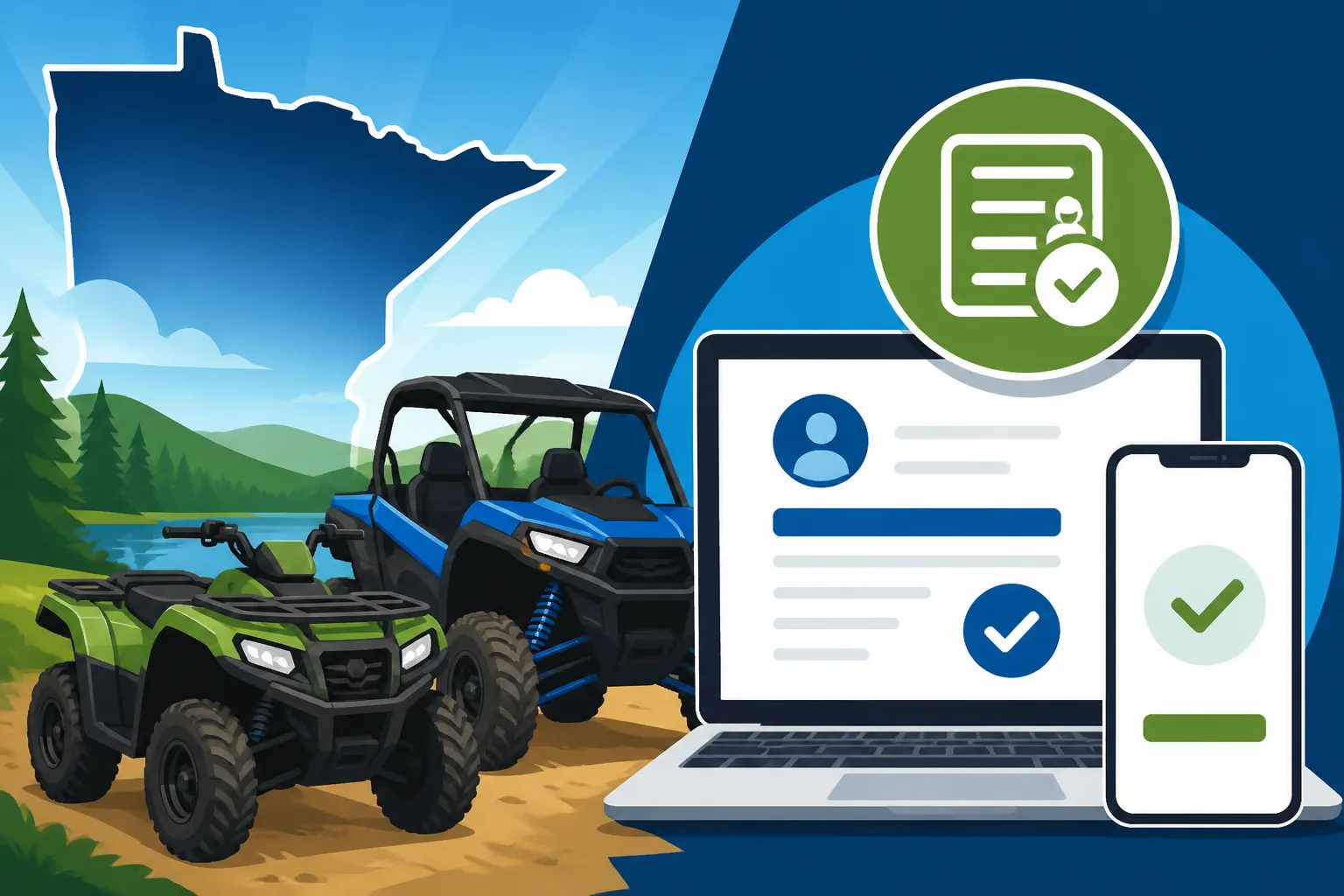
Registering Online Through Minnesota eLicense
Trying to get your ATV or UTV registered in Minnesota can feel like a game of hopscotch through a minefield of paperwork and confusing instructions. You just want to hit the trails or get your work done, but first, you're faced with the daunting task of navigating state regulations. Thankfully, the Minnesota Department of Natural Resources (DNR) offers a much-needed lifeline: the Minnesota eLicense portal. This online system is designed to streamline the process, letting you handle much of your off-highway vehicle (OHV) registration from the comfort of your own home, often saving you time, frustration, and a trip to a government office.
The Frustration of Traditional ATV/UTV Registration
Let's be honest, dealing with vehicle registration has rarely been anyone's favorite pastime. For many Minnesota ATV and UTV owners, the traditional methods of getting their machines legal often feel like an unnecessary hurdle, especially when all you want to do is enjoy the great outdoors or get important work done on your property. It's a common source of pre-ride anxiety and administrative headaches.
The Paperwork Pile-Up
Think about it: before the convenience of online systems, you’d often find yourself sifting through stacks of paper forms. You'd download them, print them out, or maybe even pick them up from a physical office. Then came the meticulous task of filling them out by hand, often deciphering tiny print and trying to figure out which box needed a checkmark and which didn't apply to your specific situation. Did you remember the VIN correctly? Is the sales tax calculation right? One wrong digit or missed signature could send you back to square one, wasting precious time and leading to a frustrating re-do.
This pile-up of documents also extended to proof of ownership. For a brand-new machine, you'd have your dealer paperwork. But for a used ATV bought in a private sale, you'd need a properly completed bill of sale, maybe a previous registration card, or even a title if your machine was one of the few that required one. Misplacing any of these vital pieces of paper meant delays and additional hoops to jump through, making a simple process feel unnecessarily complicated.
The Waiting Game at Deputy Registrar Offices
Then there's the inevitable trip to a deputy registrar office. You carve out time from your busy day, maybe during your lunch break or sacrificing a Saturday morning. You drive there, often navigating traffic, and then you're greeted by a waiting room that might be bustling. You take a number and settle in, hoping that the line moves quickly. It's not uncommon to spend a good chunk of your day just waiting, only to find out you're missing a document or made an error on a form, necessitating another trip and another wait.
The limited hours of these offices can also be a real pain. If you work a standard 9-to-5 job, getting there during their open hours can be a logistical challenge. This often means rushing after work or trying to squeeze it in on a day off, cutting into valuable personal time that you'd rather spend doing anything but standing in line. For folks living in more rural areas, the nearest deputy registrar might be a significant drive, adding fuel costs and even more time to an already drawn-out process.
Keeping Track of Expiration Dates
Once you've finally gone through the registration process, there's the ongoing challenge of remembering when it's time to renew. Minnesota ATV registrations are typically valid for three years, which sounds like a long time, but those years have a funny way of flying by. You might tuck your registration card away in a safe place, only to forget about it until you're planning your first ride of the season and suddenly realize it expired last month.
Forgetting to renew isn't just a minor inconvenience; it can lead to penalties. Getting stopped on a trail or a roadside ditch by a conservation officer with an expired registration can result in a citation and fines. It’s a common worry for riders, and the fear of missing that crucial renewal date often hangs over an otherwise simple administrative task. Many owners wish there was a more straightforward, reliable way to keep tabs on their machine's registration status and ensure they're always in compliance.
Understanding Minnesota eLicense for OHV Registration
In an effort to modernize and simplify the process, the Minnesota DNR introduced the eLicense system. It’s been a game-changer for many, taking a lot of the traditional pain points out of the equation. No more driving across town and waiting in line if you don't have to!
What is Minnesota eLicense?
Minnesota eLicense is the DNR's centralized online portal designed to manage a wide array of licenses, permits, and registrations. While it handles everything from fishing and hunting licenses to state park passes, it's also the go-to digital hub for your off-highway vehicles, including ATVs, UTVs (side-by-sides), and OHMs (off-highway motorcycles). Think of it as your personal online dashboard for all things DNR-related.
The system allows users to securely create an account, which then links to their personal profile. From there, you can view your current registrations, apply for new ones, or renew existing ones. The goal is to provide a user-friendly interface that guides you through the necessary steps, ensuring you provide all the required information in a clear and organized manner. It truly streamlines bureaucratic processes that once felt like wading through quicksand.
Who Can Use eLicense for ATV/UTV Registration?
The beauty of the Minnesota eLicense system is its broad accessibility. Most Minnesota residents who own an ATV or UTV can utilize the portal for their registration needs. This includes:
- New Registrations: If you’ve just purchased a brand-new machine from a dealer or acquired a used one in a private sale and need to register it for the first time in your name, eLicense can often facilitate this, especially if you have all your necessary [Proof of Ownership for a Minnesota ATV].
- Renewals: This is perhaps where eLicense shines brightest. If your current three-year registration is nearing its expiration date, renewing it online is typically a quick and painless process. You simply log in, select your existing machine, and follow the prompts. [Renewing a Minnesota Registration Online] has never been easier.
- Transfers: In many cases, if you've bought a used machine and need to [Transferring a Minnesota ATV After a Sale] into your name, eLicense can handle the transfer, assuming all the previous owner's information and your bill of sale are in order.
- Non-residents: Even if you're not a Minnesota resident but plan to frequently ride your machine within the state, you might be able to use eLicense to register your out-of-state machine, depending on specific circumstances and reciprocity agreements. However, for non-residents, it's crucial to check the specific requirements, as some situations might still necessitate an in-person visit or different permit types.
The system is designed to accommodate a wide range of scenarios, but always be prepared that highly complex situations (like certain estate transfers or machines with complicated ownership histories) might still require a personal touch at a deputy registrar office.
The Benefits of Online Registration
Opting for online registration through Minnesota eLicense brings a host of advantages that make it a compelling choice for most ATV and UTV owners:
- Unmatched Convenience: This is probably the biggest selling point. You can complete the entire process from anywhere with an internet connection – your home, your cabin, even a coffee shop. No need to drive, find parking, or wait in line. You set your own schedule, day or night, weekdays or weekends.
- 24/7 Accessibility: Government offices keep strict hours, but the eLicense portal is always open. This means if you suddenly remember your registration expires tomorrow at 10 PM, you can still take care of it without a last-minute panic attack or scrambling to find an open office.
- Reduced Errors: The online system often has built-in checks and prompts that help guide you through the process, minimizing the chances of missing a required field or making a common mistake. It can make sure you have all the necessary [Documents a Minnesota Registrar Wants] before you submit. This can save you from the frustrating cycle of submitting incorrect paperwork and having to redo it.
- Instant Confirmation (for most steps): For many transactions, especially renewals, you'll receive immediate email confirmation that your submission has been received and processed. This peace of mind is invaluable compared to mailing in forms and wondering when or if they'll arrive. While your physical decals and registration card will still arrive by mail, the initial confirmation gives you verifiable proof of your submission.
- Environmental Friendliness: By reducing the need for physical forms and paper printouts, online registration contributes to a more environmentally conscious process, aligning with modern conservation efforts.
Overall, Minnesota eLicense takes a lot of the dread out of ATV/UTV registration, making it a more efficient, user-friendly experience that respects your time and effort.
Step-by-Step Guide to Registering Your ATV/UTV Online
Ready to dive in and get your machine registered? The Minnesota eLicense system is designed to be intuitive, but having a clear roadmap can make the process even smoother. Let's walk through it step by step.
Gathering Your Essential Information
Before you even log into the eLicense portal, the very first and most crucial step is to gather all the necessary documentation and information. Having everything at your fingertips will prevent you from having to stop, search, and potentially lose your place in the online application.
You'll definitely need:
- Vehicle Identification Number (VIN): This is the unique 17-character code that identifies your specific ATV or UTV. It's usually stamped on the frame, often near the front suspension or under the seat. Make sure to transcribe it accurately; a single wrong character can cause significant delays. For tips on finding it, check out [Where the VIN Sits on a Quad].
- Owner Details: Your full legal name, date of birth, driver's license number, and current Minnesota residential address. If the machine is being registered in multiple names, you'll need the same details for all owners.
- Machine Make and Model: The manufacturer (e.g., Polaris, Can-Am, Honda) and the specific model name (e.g., Sportsman 570, Maverick X3).
- Year of Manufacture: The model year of your ATV/UTV.
- Purchase Information (for new registrations/transfers):
- Date of purchase: The exact date you acquired the machine.
- Purchase price: The amount you paid for the machine, which will be used to calculate [Minnesota Sales Tax on an ATV Purchase].
- Seller information: If buying from a private party, you'll need their full name and address. If from a dealer, their business name and address.
- Bill of Sale: This is critical for any private sale. A detailed bill of sale listing the VIN, sale price, date, and signatures of both buyer and seller is paramount. If you need a reliable template, resources like LawDepot can provide customizable bill of sale forms that cover all the necessary legal ground. [What a Minnesota Bill of Sale Should Carry] is essential.
- Previous Registration Information (for renewals/transfers): The current Minnesota registration number if you're renewing, or the previous owner's registration number if you're transferring a registered machine.
Take a moment to lay all these documents out and confirm everything matches. A quick double-check here can save you a lot of hassle down the line.
Navigating the eLicense Portal
Once you have your information ready, it's time to head to the Minnesota DNR's eLicense website.
- Create or Log In to Your Account: If you're a first-time user, you'll need to create a new customer account. This typically involves providing your personal information, setting up a username and password, and verifying your email address. If you've used eLicense before for hunting or fishing licenses, you can simply log in with your existing credentials. It’s a unified system, which is super convenient!
- Find the OHV Registration Section: After logging in, you'll usually see a dashboard or a main menu. Look for sections related to "Recreational Vehicles," "OHV Registration," or similar phrasing. The specific navigation might change slightly over time, but generally, it's clearly labeled. You might need to select "DNR Registrations & Permits" and then "Off-Highway Vehicles (OHV)."
- Start a New Application or Select a Renewal: Depending on whether you're registering a machine for the first time, transferring ownership, or renewing an existing registration, you'll select the appropriate option. The system is pretty good at guiding you through these choices.
Take your time clicking through the prompts. Don't rush, and read all the instructions carefully. The system is designed to be user-friendly, but a moment of inattention can lead to selecting the wrong option.
Completing the Application and Payment
This is where you'll input all the information you painstakingly gathered in the first step.
- Fill Out the Digital Form: The eLicense system will present you with a series of screens, asking for your personal information, the machine's details (VIN, make, model, year, etc.), and purchase specifics.
- Be meticulous when entering your VIN. Many systems do a checksum, but it's still best to type it precisely.
- Ensure your contact information is up-to-date, as this is where your new registration card and decals will be mailed.
- For new registrations or transfers, you'll input the purchase price, and the system will often automatically calculate the Minnesota sales tax due.
- In some cases, especially for transfers or if there are questions about ownership, the system might prompt you to upload digital copies of documents like your bill of sale or previous registration. Make sure you have clear scans or photos of these ready.
- Review Your Application: Before moving to payment, the system will typically provide a summary of your entire application. This is your absolute last chance to catch any errors. Go through every field, double-checking names, addresses, VINs, and purchase details. Correcting mistakes after submission can be a much more involved process, potentially requiring contact with the DNR directly.
- Make Your Payment: Once you're confident everything is correct, you'll proceed to the payment section. The eLicense portal accepts major credit and debit cards. You'll enter your card details in a secure payment gateway. The system will clearly display the total amount due, including the [Minnesota ATV Registration Fee for Three Years] and any applicable sales tax.
- Confirmation: After a successful payment, you should receive an on-screen confirmation message and typically an email confirmation shortly thereafter. This email is important; save it for your records as immediate proof of your transaction.
What Happens After You Submit
The online submission is a huge step, but it's not the absolute end of the process.
- Processing: The DNR staff will review your online application. For straightforward renewals, this can be almost instantaneous. For new registrations or transfers, there might be a brief processing period while they verify the information, especially if documents were uploaded.
- Mail Delivery: Your physical registration card and registration decals will be mailed to the address you provided. This typically takes a few business days to a couple of weeks, depending on mail service and DNR processing volume. Keep an eye on your mailbox!
- Temporary Proof: While you wait for the physical items, your email confirmation often serves as temporary proof of registration. It's a good idea to keep a copy of this email (either printed or on your phone) with you when you ride, especially right after you've registered and before your decals arrive. This can be invaluable if you encounter a conservation officer.
Common Scenarios and Troubleshooting with eLicense
While the eLicense system is a huge convenience, sometimes specific situations can throw a wrench into the works. Knowing how to navigate these common scenarios or troubleshoot minor issues can save you a lot of grief.
Renewing an Existing Registration
This is by far the easiest task to accomplish through Minnesota eLicense, and it's where the system truly shines for its convenience. The process for [Minnesota Registration Renewal Every Three Years] is typically straightforward:
- Log in to your eLicense account.
- Navigate to your existing registrations. You should see a list of any machines currently registered in your name.
- Select the ATV/UTV you wish to renew.
- Follow the renewal prompts. The system will usually pre-fill much of the information, so you're mostly confirming details.
- Pay the renewal fee.
- Receive confirmation.
The system will often send you email reminders when your registration is nearing its expiration date, which is incredibly helpful for preventing those dreaded expired registration penalties. Just make sure your contact information on file is always current. If you haven't received a reminder, it's always a good idea to log in and check your registration status proactively.
Registering a New-to-You Machine
Buying a used ATV or UTV can be exciting, but the registration process, particularly after a private sale, requires careful attention to detail. The eLicense portal can handle many of these transfers, but you must have your ducks in a row.
The most critical document is the bill of sale. For a smooth online transfer, the bill of sale needs to be complete, accurate, and clearly show the transfer of ownership from the previous owner to you. It should include the machine's VIN, make, model, year, the sale price, the date of sale, and the full names and signatures of both the buyer and seller. A template from a reputable source like LawDepot can ensure you have all the necessary legal clauses. Remember, a poorly executed bill of sale is the number one reason transfers get hung up.
If the machine was previously registered in Minnesota, the eLicense system will often ask for the prior registration number. Having this information speeds things up considerably. For a machine that's never been registered in Minnesota or has a very old registration, the system might require more detailed proof of ownership, such as a manufacturer's certificate of origin (MCO) if it's new, or an affidavit of ownership if the paperwork is really sparse. When trying to complete [Minnesota Registration After a Private Sale], good documentation is key.
What if My Paperwork Isn't Perfect?
Life isn't always neat, and sometimes the paperwork for your ATV or UTV might not be absolutely pristine. What if the seller never gave you a formal bill of sale, or it's incomplete? What if the previous owner is unreachable?
The Minnesota eLicense system is designed for relatively straightforward transactions. If your application deviates from the norm – for example, if you're trying to [Registering a Minnesota ATV With No Ownership History] or the bill of sale is missing critical information – the online system might not be able to process it automatically. It might flag the application for manual review, or it could even tell you that you need to visit a deputy registrar in person.
In these situations, it's always best to be proactive. If you anticipate issues with your paperwork, it's often a good idea to gather as much supporting documentation as possible. For instance, if you only have a handwritten note, try to supplement it with photos of the machine with the seller, text messages confirming the sale, or other forms of evidence. For crucial documents like a bill of sale, if the one you received is inadequate, you might be able to work with the seller (if they're still available) to complete a proper one, perhaps using a template from a service like LawDepot. Unfortunately, if you're missing fundamental proof of ownership, the online system simply won't have the tools to help you, and you'll definitely need to connect with a [Deputy Registrars That Handle ATV Registration] office directly.
Technical Glitches and Payment Issues
Even the best online systems can have their off days. You might encounter a technical glitch, such as:
- Website Freezing or Crashing: This can often be resolved by clearing your browser's cache and cookies, trying a different web browser (e.g., Chrome, Firefox, Edge), or restarting your computer.
- Login Problems: If you're having trouble logging in, double-check your username and password. If you've forgotten them, use the "forgot password" link. Ensure your CAPS LOCK isn't on!
- Payment Gateway Errors: Sometimes a payment might fail to process. This could be due to an incorrect card number, expiration date, or security code. It might also be an issue with your bank flagging the transaction. Check with your bank first, then try re-entering the payment details. Ensure your internet connection is stable during the payment process.
If you've tried these basic troubleshooting steps and are still experiencing persistent issues, do not keep trying repeatedly in a way that might lock your account. Instead, look for a "Contact Us" or "Help" section on the DNR eLicense portal. They typically have dedicated technical support lines or email addresses for assistance with the online system. Don't let a technical hiccup deter you; help is usually available.
Beyond Online Registration: What to Expect and When to Seek Help
While the Minnesota eLicense portal significantly simplifies the ATV/UTV registration process, there are still some important follow-up steps and specific scenarios where an in-person visit might be unavoidable. Understanding these can help you manage your expectations and ensure you're always in compliance.
Receiving Your Decals and Registration Card
After you've successfully completed your online registration or renewal and received your email confirmation, the waiting game begins for your physical documents. The Minnesota DNR will mail you:
- Your Registration Card: This is a small, typically laminated card that serves as your official proof of registration. It will list your name, address, machine details (VIN, make, model), and the expiration date of your registration. You should always carry this card with you when operating your ATV or UTV, especially on public lands or trails. It's what a conservation officer will ask for during a check. [Do You Carry Papers on a Minnesota Trail?] is a question often asked by new riders.
- Registration Decals (Stickers): These are the physical stickers that you apply to your machine. They typically display the expiration year of your registration. The DNR has specific rules about where these decals must be placed. Generally, one must be affixed to each side of the machine, in a conspicuous location, forward of the handlebars. It's crucial that these are visible and properly displayed. For exact instructions, consult [Where a Minnesota ATV Registration Sticker Goes] or [Sticker Placement on a Minnesota Machine]. If your decals are lost or damaged, you can usually order replacements through the DNR.
Allow a couple of weeks for these items to arrive. If it's taking longer than expected, you can often check the status of your order through your eLicense account, or contact the DNR directly.
When You Still Need an In-Person Visit
Despite the convenience of eLicense, there are specific situations where the complexities of registration simply can't be handled through an online portal. These usually involve unique circumstances or documentation issues that require a human eye and judgment. You'll likely need to visit a [Deputy Registrars That Handle ATV Registration] in person if:
- You're Missing Critical Proof of Ownership: If you bought a used machine and the previous owner's documentation is non-existent, incomplete, or there's a significant gap in the ownership chain, eLicense often won't be able to process your request. A deputy registrar can help you navigate these trickier situations, sometimes requiring affidavits or other forms to establish legal ownership. [Registering a Minnesota ATV With No Ownership History] is almost always an in-person task.
- Complex Transfers: Transfers involving estates (after a death), multiple owners with unique agreements, or machines with liens that need to be cleared might be too complex for the automated system.
- Correction of Errors After Submission: While eLicense helps minimize errors, if a significant mistake was made on an online application and it's already been processed, correcting it might require a visit with identification and supporting documents.
- Salvage or Rebuilt Machines: If your ATV or UTV has a salvage title or has been rebuilt from a wreck, the registration process is more involved and typically requires a physical inspection or specialized paperwork that eLicense can't accommodate.
- You Prefer In-Person Service: Some individuals simply prefer the reassurance of speaking to a person, asking questions directly, and receiving immediate confirmation. This is perfectly valid, and deputy registrars are there to help!
Understanding Registration Fees and Validity
Minnesota ATV registrations are typically valid for three years from the date of issuance. This three-year cycle is a key piece of information for budgeting and planning your riding. The [Minnesota ATV Registration Fee for Three Years] helps fund the state's OHV trail system, conservation efforts, and administrative costs. While the specific fee amount can change, it's a fixed cost for that three-year period.
It's important to differentiate this main registration fee from the non-resident trail pass. If you're an out-of-state rider, or even a Minnesota resident planning to ride specific grant-in-aid trails, you might also need a separate [Minnesota's Non-Resident ATV Trail Pass] or a regular trail pass, which has its own fee and validity period, usually annual. Always check the specific requirements for where and how you plan to ride.
The Importance of a Valid Registration
Having a current and correctly displayed registration isn't just a suggestion; it's a legal requirement for operating your ATV or UTV on public lands, trails, or even ditch lines in Minnesota. Ignoring this requirement can lead to unpleasant consequences.
The most common penalty for an unregistered ATV or UTV is a citation and a fine. Conservation officers and local law enforcement actively patrol riding areas, and they will check for valid registration. The fines for [Penalties for an Unregistered ATV in Minnesota] can be significant, far outweighing the cost of proper registration. Beyond the financial penalty, an officer might prohibit you from continuing your ride, potentially spoiling your day and creating logistical problems if your machine needs to be trailered home.
Moreover, a valid registration is often a prerequisite for obtaining ATV insurance, which is highly recommended for protecting your investment and providing liability coverage. In the event of an accident, an unregistered machine could complicate insurance claims or even invalidate your policy. Staying on top of your registration ensures you can enjoy your machine legally and without unnecessary stress or financial risk.
| Feature | Online Registration (eLicense) | In-Person Registration (Deputy Registrar) |
|---|---|---|
| Convenience | High (24/7 access, from home) | Low (limited hours, travel, waiting) |
| Speed | Fast (immediate confirmation, mailed documents usually within weeks) | Varies (immediate for some steps, depends on wait times) |
| Error Reduction | System prompts help, but user input errors possible | Direct interaction allows for immediate clarification & correction |
| Required Docs | Digital copies may be uploaded, physical records still needed | Physical documents required for review and often to be copied |
| Payment Options | Credit/Debit cards | Cash, check, credit/debit cards (varies by location) |
| Complex Scenarios | Limited (may redirect to in-person) | Best for unique ownership, missing paperwork, special cases |
| Support | Online FAQs, email, phone support | Direct, face-to-face assistance |
Disclaimer
This article is for general informational purposes only and does not constitute professional advice. Laws, prices and regulations vary by location and change over time. Consult a qualified professional for guidance on your specific situation.